
Número actual
Vol. 31 Núm. 340 (2026)
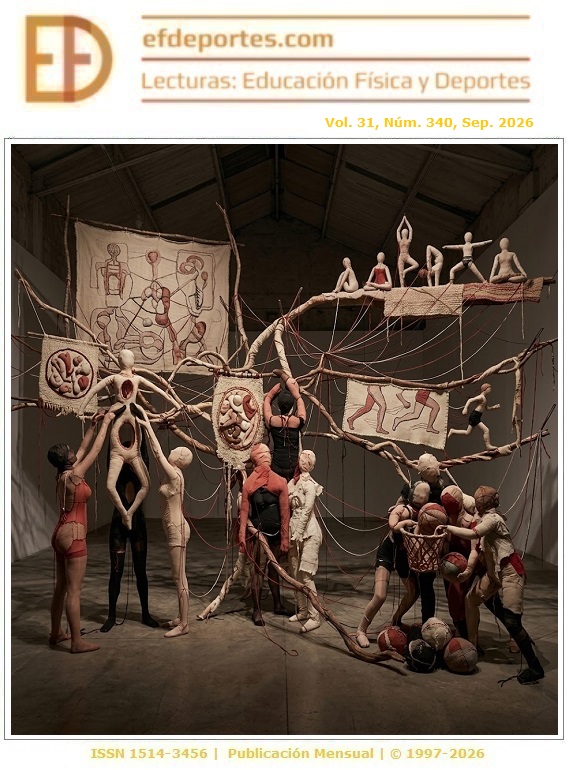
Corporalidades, Narrativas y Emancipación
Este número invita a explorar la educación física, el deporte y la actividad física no solo como prácticas corporales, sino como narrativas vivas y territorios de disputa política. En esta edición se presenta el monográfico Investigaciones Narrativas en la Actividad Física y el Deporte, gestado a partir del seminario de posgrado dictado por el Dr. David Beer en la Universidad Nacional de Mar del Plata. Mediante la investigación biográfico-narrativa, la obra asume el compromiso ético de desarmar la matriz institucional, humanizar la pedagogía y concebir el cuerpo como un territorio de resistencia.
Paula Andrea Vélez Castañeda analiza la incorporación del yoga y el cuidado emocional en el ámbito escolar como estrategias de protección de la vida y educación situada en la interdependencia; Mariana Flores explora la transformación de los vínculos al llevar las clases de secundaria a la playa; y Gabriel Mariano Altamiranda reivindica la reapropiación del espacio público a través del “fútbol salvaje” en la plaza barrial durante los años 90. Asimismo, Estefanía Lourdes Gisele Ferreira aborda la resiliencia y reconstrucción identitaria tras la mutilación física en el automovilismo (Alex Zanardi y Billy Monger); Julieta Goyena examina la tensión sobre los mandatos de género a través de las futbolistas en el patio escolar; y Raúl Oscar Martínez analiza la superación del trauma e identidad en Cala, hija de un represor de la dictadura, mediante el deporte. Finalmente, Leila Ángela Kafer propone la Biodanza para concebir el cuerpo como unidad epistémica, y María Florencia Barbella reivindica el aukantüm com (jugar en comunidad) frente a la mercantilización corporal.
A lo largo de la compilación, se examinan las estructuras de poder inscritas en la carne, las dinámicas de género, el trauma, el juego comunitario y el cuidado. En conjunto, este monográfico reafirma que investigar las corporalidades a través de sus propias narrativas no es solo una elección metodológica, sino un acto político de reparación, memoria y emancipación pedagógica.
Lic. Tulio Guterman, Director – Septiembre de 2026
Publicado:
2026-09-01
Videos
Artículos de Monográfico
Artículos de Investigación
Artículos de Revisión
Informaciones
Seguinos en Redes Sociales
Facebook: https://www.facebook.com/EFDeportes.revistadigital/
Instagram: https://www.instagram.com/efdeportes/
LinkedIn: https://www.linkedin.com/in/tulio-adrián-guterman-41835714b/
Youtube: https://www.youtube.